


The First AI Advantage Belongs to the Prepared
Over the last two months, I have met with retailers and brands, attended several industry events and observed the window for waiting to see how AI plays out has closed. Fast follower is still a respectable position. Early adopter is the better one. Remaining a laggard is now a decision to fall behind competitors who are already shipping faster than you.

Retail AI must earn the right to act
The opportunity for Retail AI is to help customers get better answers and act on them faster. ASOS reports that AI supports around 20% of its buying decisions, while Zalando reported a 63% increase in high-value interactions with its AI Assistant during the first half of 2026.

Is Permacrisis Now Retail’s New Normal?
I was talking to our Chief Revenue Officer recently about what’s trending in our industry. No shortage of candidates. But the one I keep coming back to isn’t a technology or a channel. It’s a pattern.

Resetting the ERP Cost Curve
Your ERP anchors the ship. It serves as the backbone of your retail operations. Outdated cores bloated with custom code and patched acquisitions steadily devour budgets while agility evaporates.

Agentic Loyalty Unlocking Billions in Dormant Value
With 2026 marking retail’s “flight to profitability”, loyalty budgets now face scrutiny on par with stores, returns and media spend. The global loyalty management market size is estimated at roughly USD 14–15 billion in 2026, which means retailers are already carrying billions in rewards value inside these programmes, much of it sitting dormant or used in low impact ways.

ERP vs. OMS – Are We Asking the Wrong Question?
De-risking ERP and boosting omnichannel margins.
Every organization believes their next ERP program will be cleaner, faster, more controlled. Most follow the same arc, where the first phase delivers hope, the second brings fatigue and by phase three, “stability” becomes the new definition of success. Somewhere along the way, the goal shifts from transformation to survival. That’s where the real conversation about ERP vs. OMS should begin.

Maximising Margins in a Multi-Marketplace World
Benjamin Franklin’s words still ring true, “A small leak will sink a great ship.” In the complex world of multi-marketplace e-commerce, small, overlooked costs and hidden fees gather like drops forming a tide, applying pressure on profit margins and threatening even the strongest businesses. Identifying and sealing these margin leaks is critical to sustaining financial strength and achieving sustainable growth.

Product Data Quality – The Lever of Marketplace Profitability
Marketplaces remain retail’s most formidable growth engines. They now command over 60% of global eCommerce sales, giving retailers unmatched access to ready-to-buy audiences and fastest route to expansion into new geographies. For every brand seeking greater sales volume, selling through a marketplace promises instant scale, however success demands disciplined product data management throughout the lifecycle.

How Technical Debt Creeps into SAP Commerce
In many retail organizations running SAP Commerce, customization has become second nature. The platform is engineered to support rapid innovation and complex business models for teams to respond quickly to evolving market needs. However, over time, repeated short-term fixes, localized enhancements and integrations can introduce hidden complexity. While SAP Commerce continues to perform, this accumulated complexity, often invisible at first can gradually impact delivery speed, scalability and long-term maintainability. At this point, leadership begins to ask:
“Why is our platform no longer scaling with the business?”
Reclaiming Agility in SAP Commerce Environments
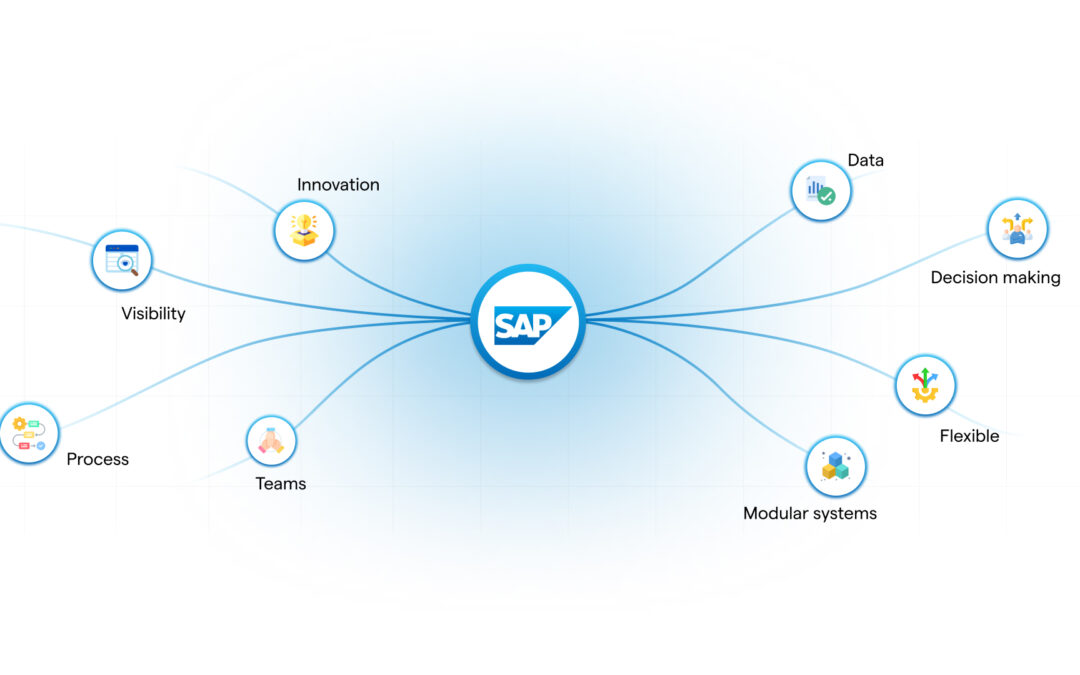
If your modernization strategy starts and ends with technology, you’re setting yourself up for failure. In SAP Commerce environments and enterprise systems more broadly, true agility is realized when people, processes, culture and mindset are in alignment. Technology plays a critical role, but it only adds value when it is activated with clear purpose, cross-functional readiness and a commitment to continuous change.

The Hidden Cost of Over-Engineering in SAP Commerce
Complexity doesn’t arrive as a mistake. Often, it’s the by-product of trying to stay ahead.
A new integration, “just in case.”
A custom flow, “for flexibility.”
Another extension, “to future-proof.”
Over time, these well-meaning additions build up. The SAP Commerce environment grows cluttered with legacy configurations, redundant processes and bespoke logic that no longer reflects business needs.
In today’s fast-moving digital commerce landscape, especially sectors such as retail, where agility, customer experience and speed-to-market are everything, many organisations are discovering a hard truth: their SAP systems are doing too much.

Building Resilience in Health & Wellness Supply Chains
In the healthcare and wellness industry, timely availability of essential products, such as supplements, cosmetics, exercise equipment and holistic remedies, is crucial. However, global supply chains are vulnerable to disruptions, demand shifts and evolving trade regulations that can severely impact inventory management. By making some strategic adjustments, you can build a resilient, streamlined and future-ready supply chain that meets customer needs efficiently.

Balancing Personalisation, AI and Automation with Compliance in Healthcare
The health and wellness eCommerce market is experiencing rapid growth, driven by consumer demand for personalized advice, easy-to-use experiences and quick servicing. AI and automation are main enablers of this trend, empowering businesses to offer tailored product recommendations, automate order fulfilment and handle customer interactions through AI-driven assistants.
However, leveraging AI and automation in this space comes with a critical caveat which involves ensuring compliance with rigorous regulations to protect customer security and privacy. So, how do you achieve a balance between innovation and adherence to regulatory requirements?
WE FOSTER COLLABORATIONS